Rucking for Beginners: How to Start Walking with Weight
A backpack, a light load, and 20 minutes on flat ground. Here's how rucking actually works and how to start it without hurting yourself.


A guy at the park last weekend had a backpack that looked stuffed with bricks, and it turns out it basically was. He told me he had ten pounds of sand bottles in there and had been doing this twice a week for a month. His knees felt fine, his shoulders were sore the first week, and his regular walk suddenly felt like nothing without the extra weight.
That is rucking, walking with added weight on your back, and it has quietly become one of the most talked about fitness habits of 2026. Weighted vest sales jumped more than 50 percent in a year, and gear brands that used to sell only to soldiers and hikers are now shipping to people who just want a heavier version of their evening walk.
What rucking actually is
The word comes from rucksack, and the practice comes from military training, but you do not need a drill sergeant or a 40 pound pack to start. At its simplest, rucking is just walking while carrying extra weight, either in a backpack or a weighted vest.
- A backpack loaded with plates, sand, or even books works fine to start.
- A weighted vest keeps the load spread across your torso instead of on your back, which some people find more comfortable for regular walks.
- Backpacks tend to make you lean forward slightly, which research suggests burns a bit more energy per session than a vest with the same weight.
- Vests keep your posture more upright, which is part of why some people prefer to wear one during errands or a walk they were already going to take.
How much weight to start with
Most guides land in the same range: about 10 percent of your body weight for your first few sessions. For someone who weighs 160 pounds, that is roughly 15 to 16 pounds. If that sounds like a lot, go lighter. A stable 10 pounds beats an unstable 20, and a stable load matters more than an impressive number.
Does it actually do anything beyond a regular walk
Yes, and the research is fairly consistent on this. Adding load increases how many calories you burn at the same walking pace, since your body works harder to move the extra weight. Studies comparing backpacks and vests found backpacks burn somewhat more per session because of that forward lean, while vests let you hold a more natural gait for longer. Either way, you are getting more out of the same walk you were already doing.
None of this replaces a normal daily walk, it just adds a strength component on top of one. If you are the kind of walker who prefers unweighted, brisk sessions most days and rucking occasionally, that mix works fine. We covered the basics of brisk walking if you want the unweighted version of this conversation.
How to start without wrecking your first week
- Keep your first few sessions to 20 to 30 minutes on flat ground. Hills and stairs can wait.
- Load the weight high and close to your back if you are using a pack. A load that sags low pulls your posture backward and strains your lower back.
- Go two to three times a week at first, with a rest day between sessions. Your shoulders and feet need time to adjust to carrying load.
- Add distance before you add weight. Once 2 miles at your starting weight feels easy, add 5 pounds rather than another mile and another 5 pounds at once.
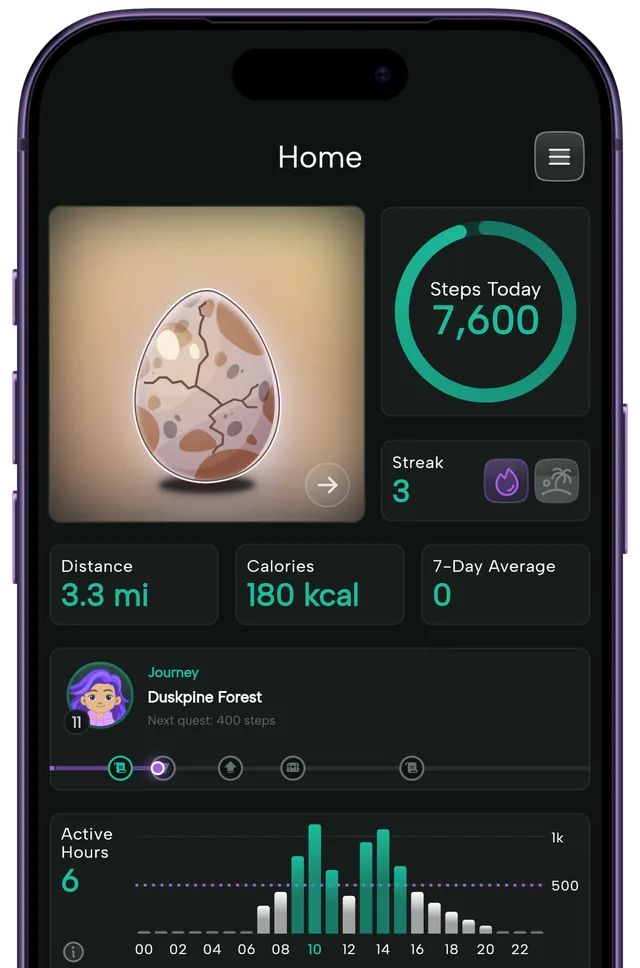
A rest day does not have to mean a day off from walking. In Steps & Beasts, an unweighted recovery walk still moves your streak forward and keeps an egg warm, so you do not have to choose between letting your shoulders heal and keeping your habit alive.
Quick answers about rucking
Is rucking better than just walking faster? They train different things. Rucking adds strength and bone loading on top of the cardio you already get from walking. Speed changes your cardio intensity but does not add resistance.
Can you ruck every day? Most guides recommend rest days, especially in your first month. Your joints and connective tissue need time to adapt to carrying load, even if your cardiovascular system feels ready sooner.
Do you need special gear? No. A sturdy backpack and something to weigh it down gets you through your first few weeks. Ruck plates and dedicated vests are worth it once you know you like the habit.