Japanese Walking: The Fitness Trend That Actually Works
Japanese walking alternates 3 min fast with 3 min slow. Research shows 14% better cardio gains than regular walking. Here's how to start.


Search interest for Japanese walking jumped nearly 3,000 percent in a single year. That's not a rounding error. It's the biggest fitness trend of 2026 according to PureGym's annual report, beating out everything from walking yoga to hot reformer Pilates. And the reason it keeps spreading isn't hype. It's that the underlying research is surprisingly solid.
The method itself is simple: alternate between three minutes of brisk walking and three minutes of slow walking, repeat for 30 minutes, do it four or more days a week. That's it. No equipment, no gym, no technique to master.
What Japanese walking actually is
The official name is Interval Walking Training, or IWT. It was developed by researchers at Shizuoka University in Japan and has been studied in thousands of participants over 15+ years. The core protocol: walk at roughly 70 percent of your peak aerobic capacity for three minutes, then ease off to a comfortable stroll for three minutes. Repeat five times for a 30-minute session.
Seventy percent sounds technical but it just means breathing harder than a casual walk while still being able to say a few words. Think of it as the pace you'd use if you were running slightly late to a meeting and trying not to look like it.
What the research actually found
A 2024 review co-authored by the researchers who developed IWT found cardiovascular fitness improved by 14 percent in IWT participants versus about 3 percent in people who walked at a steady pace for the same duration. That's not a small gap. Blood pressure dropped, blood glucose improved, and leg strength went up, all in people ranging from healthy middle-aged adults to those managing type 2 diabetes.
The reason the intervals work is that pushing to a higher intensity, even briefly, puts more demand on the cardiovascular system and the leg muscles than staying comfortable the whole time. The recovery periods let you sustain that effort over a full 30 minutes without burning out. You get a training stimulus your body isn't used to from a walk, without the joint load of running.
How to do Japanese walking
You need a timer and a pair of shoes. Set your phone to beep every three minutes, or use a watch with interval alerts. For the fast intervals, walk at a pace that feels like a 6 or 7 out of 10 effort. Slightly out of breath, but not gasping. For the slow intervals, genuinely slow down. A meandering pace. The contrast is the point.
If you've never done any interval training, start with four rounds (24 minutes) and add a round each week until you're doing five complete rounds. Your step count per session will be higher than a regular walk because you're covering more ground in the fast intervals.
Japanese walking vs a regular walk
Regular walking at a steady pace is genuinely good for you. It's low impact, sustainable, and clears the head. Japanese walking doesn't replace that. But if you've been hitting your daily steps for a few months and feel like progress has stalled, IWT is a way to get more out of the same 30 minutes.
Research comparing the two directly shows IWT participants gain more aerobic fitness and strength in 5 months than steady walkers gain in the same period. Same time commitment, meaningfully better results for people who are already in a walking habit and want to push further.
Adding Japanese walking to your streak
One 30-minute IWT session adds roughly 3,000 to 4,000 steps depending on pace. That covers a big chunk of most daily goals. Four sessions a week plus incidental walking from errands and commutes gets most people to 7,000 or 8,000 steps on those days without any extra effort.
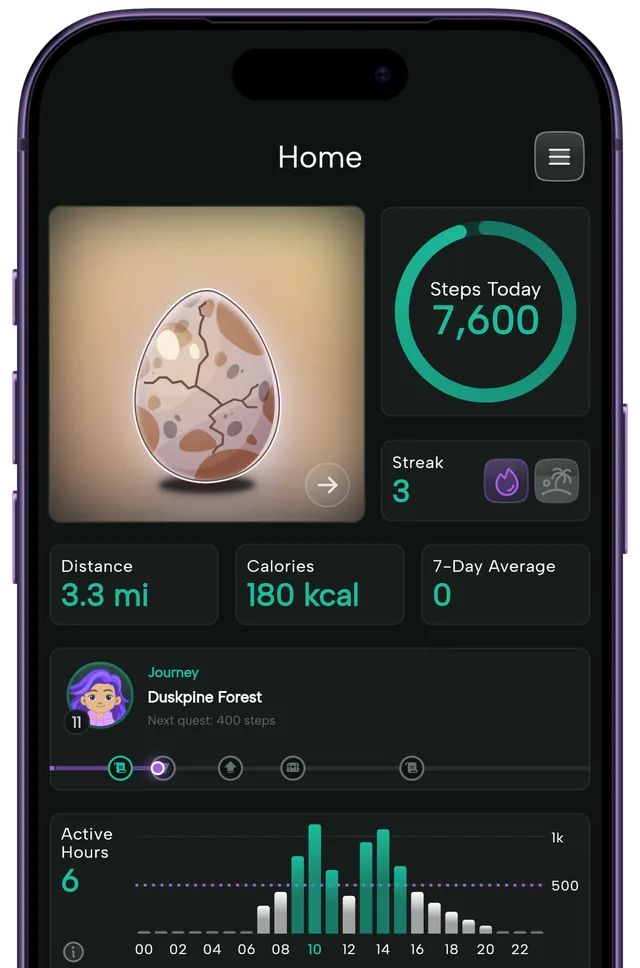
The natural structure of IWT, 5 rounds of intervals, pairs well with tracking. Each fast interval feels like a small win. If you use Steps & Beasts, your IWT sessions push your eggs closer to hatching faster than a leisurely stroll would. Four days a week of this and your step streak will look after itself.