The 12-3-30 Workout: What It Is and Does It Work?
The 12-3-30 treadmill workout is 12% incline, 3 mph, 30 minutes. Here's what it actually does and who it's for.


In 2020, a fitness creator named Lauren Giraldo posted a short video about her treadmill routine. Three numbers: 12, 3, and 30. That was it. The treadmill incline, the speed in miles per hour, and the duration in minutes. The video went quiet for a few years, then resurfaced and this time it didn't stop. By 2026, it ranks as one of the most consistently viral walking formats on TikTok, Instagram, and YouTube combined.
What keeps it going isn't mystery. It's the fact that most people who try it actually stick with it. The numbers tell you exactly what to do, there's nothing to interpret, and it's hard enough to feel worthwhile without wrecking your joints.
What the three numbers mean
12 is the incline percentage you set on the treadmill. Most treadmills go up to 15, so 12 is steep but not the maximum. 3 is the walking speed in miles per hour, which is roughly 4.8 kilometers per hour. A brisk but walkable pace. 30 is how many minutes you stay at those settings.
The incline is where the work happens. A flat walk at 3 mph is easy. At 12 percent incline, the same speed becomes a genuine workout. Your glutes, hamstrings, and calves engage far more than they do on flat ground. Research on incline walking shows it burns 30 to 40 percent more calories than walking at the same speed on a flat surface.
What it actually does to your body
The 12-3-30 workout sits in Zone 2 cardio territory for most people. Heart rate typically lands between 60 and 70 percent of your maximum. That's the range associated with cardiovascular conditioning and fat burning over time, without the recovery cost of high-intensity training. You can do it three to five times a week and not feel broken afterward.
The posterior chain activation is a real benefit. Most of us spend most of the day sitting, which underuses glutes and hamstrings. Thirty minutes of steep incline walking is a low-impact way to address that. Some people report noticeably sore glutes the first few times, which is the muscles catching up.
How many calories does 12-3-30 actually burn
Honest answer: it depends on your weight. A 70 kg person burns roughly 280 to 320 calories per session. A 90 kg person closer to 360 to 400. The treadmill display will probably show a higher number. Most treadmill calorie counters overestimate by 10 to 15 percent, so trust the lower end of any estimate you see.
That's comparable to a slow jog for the same duration, with much less stress on knees and ankles. Four sessions per week adds up to roughly 1,200 to 1,600 calories burned from the workout alone. Weight loss still depends on overall calorie balance, but this is a sustainable way to build a consistent weekly deficit.
Who 12-3-30 is good for
It works well for people who want a structured cardio routine they can repeat without needing to think about it, anyone with joint issues who can't run comfortably, and people who've been walking outdoors and want to add some intensity on days when weather or time is a factor.
If you've never exercised, start at a lower incline, maybe 6 to 8 percent, and build up. At full 12 percent, beginners sometimes experience calf tightness or lower back strain. The protocol is forgiving but the incline is steep. Give your body a week or two to adjust before going to the full settings.
12-3-30 and your daily step count
One session adds roughly 2,500 to 3,500 steps depending on stride length. That's a solid contribution to a daily goal. On days when you can't get outside, a 12-3-30 session on the treadmill keeps your streak alive and covers a meaningful share of your step target.
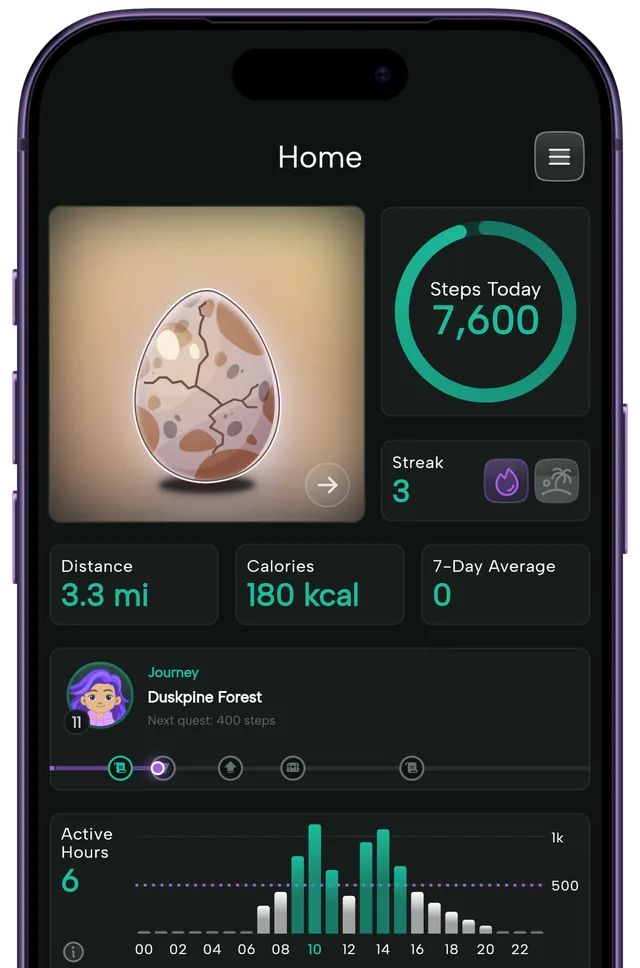
The beauty of a treadmill session for step tracking is that it's consistent. Same incline, same speed, same duration. You know roughly how many steps you'll log before you start, which makes it easy to plan around. If you track with Steps & Beasts, those indoor steps count the same as any others toward hatching your next egg.