How Many Steps on a World Cup Match Day? A Fan's Guide
A World Cup match day can quietly double your step count. What fans actually walk, from transit to the final whistle.


I still remember checking my phone after a group-stage match in Lyon a few years back: 18,400 steps, and I had a seat ticket. I was not training for a marathon. I was just a fan who showed up early, got lost near a fan zone, and walked the long way back when the metro was packed. World Cup match days have a way of doing that.
Why match days add steps without feeling like a workout
Most people picture 90 minutes in a seat. The day is bigger than kickoff. Security lines, concourse loops, photo stops, and the post-match crowd shuffle all add up. You stand more than you think, too. When the crowd reacts, you stand. When someone blocks the view, you shift. It is low intensity, but it runs for hours.
Travel guides for the 2026 tournament often tell fans to plan for long walking days. Some estimate 15,000 to 25,000 steps on a typical match day, or roughly 5 to 8 kilometers, once you include transit and fan zones. Your number will vary. A home watch party is lighter. A stadium trip in a host city is heavier.
How many steps to expect
Think in three bands rather than one magic number.
- Home viewer, one match, short walk before kickoff: often 4,000 to 7,000 steps unless you make an effort.
- Local fan, public transit plus fan festival, no long post-match wander: often 10,000 to 15,000 steps.
- Travel fan, early arrival, full fan zone, long exit walk: 18,000 to 25,000 steps is common.
Halftime is underrated. Fifteen minutes of laps around the block or the concourse can add 1,500 to 2,500 steps without missing the second half. Treat it like a built-in movement break.
Where the steps actually come from
Transit usually dominates. Train or metro to the venue, wrong exit, then a correction walk. Host-city guides for 2026 stress arriving early partly because the last kilometer can be slow when streets fill up.
Inside the stadium, concourses are long. Food, restrooms, and merch pulls you into U-turns. Security may funnel you through extra loops. After the match, everyone leaves at once, so even a short trip to the station becomes a long shuffle.
Fan zones and watch parties outside the stadium can add thousands of steps before you ever scan your ticket. If you meet friends first, you will walk between bars, screens, and photo spots without noticing.
Match days vs rest days during the tournament
The 2026 World Cup runs for about five weeks. You will not have a match every day. That rhythm matters for habits. A big step day on Saturday does not mean you should skip moving on Tuesday when your team is not playing.
Rest days are good for lighter walks and keeping streaks alive. Match days are good for big totals. If you use a gamified step tracker, save your longer routes for days when the schedule pushes you anyway, then protect your streak on quiet days with a 20-minute loop.
Track it without ruining the fun
You do not need to stare at your watch during the national anthem. Check steps at halftime and after full time. If you hit a daily goal early, treat it as a bonus, not a reason to sit for three days.
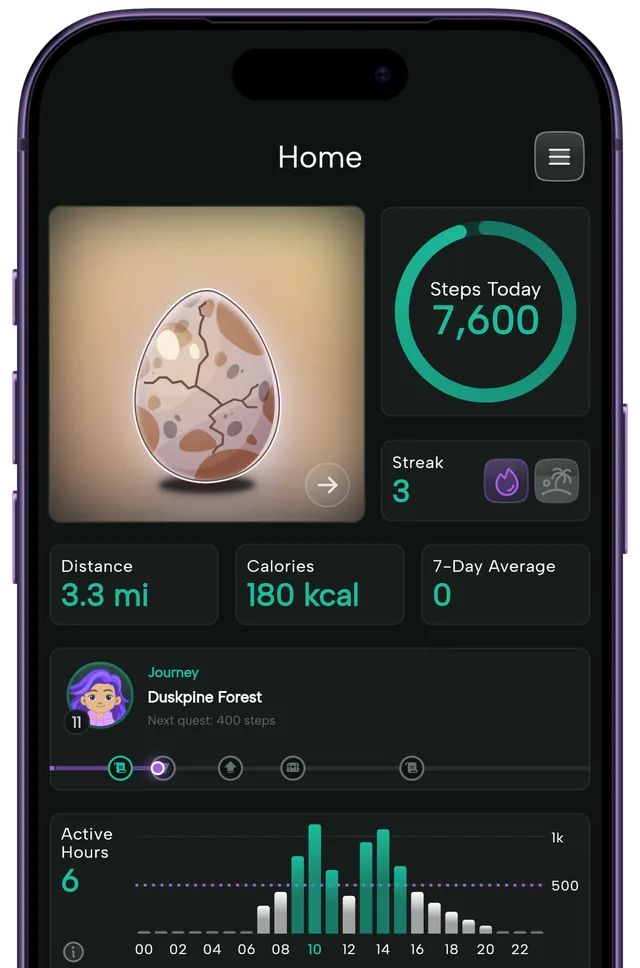
A step app with streaks or collectibles helps on slow days more than on peak match days. When you are already at 20,000 steps, motivation is easy. When the tournament has a midweek lull, that is when an egg about to hatch or a streak on the line keeps you moving.
Common questions
Does standing count toward steps? Your phone counts steps from walking motion, not standing still. Short shuffles in a crowd add a little, but real steps come from moving between places.
Should I aim for 10,000 steps on match day? If you are at a host venue, you may blow past that without trying. At home, set a smaller halftime goal instead.
What about indoor watch parties? Walk before kickoff or at halftime. Indoor laps count. Your step counter does not care if the match is on a big screen in your living room.