Walking After Dark: Stay Safe and Keep Your Streak
Shorter days need not end your walking habit. Use reflective gear, smarter routes, and indoor backups to keep moving safely.


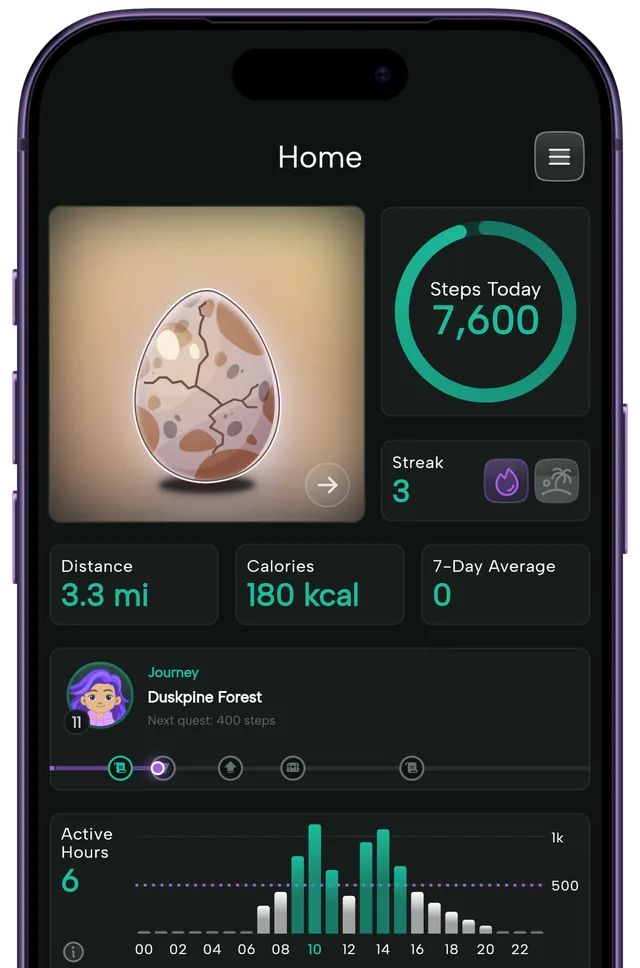
At 7:18 p.m., the loop you walked all summer can suddenly feel like a different route. You have 6,420 steps, an egg at 94%, and a black jacket that seemed perfectly practical when you left home. Then the streetlights thin out.
Walking after dark can still be a calm, useful part of the day. It just needs a different plan from a bright July evening. Visibility, route choice, and a backup option matter more than squeezing in one last long loop.
Why walking after dark needs a different plan
Darkness changes two things at once: drivers have less time to recognize you, and cracks, wet leaves, curbs, or ice become harder for you to spot. In its 2024 pedestrian report, the U.S. National Highway Traffic Safety Administration found that 76% of pedestrian fatalities happened in dark conditions. That figure describes fatal crashes, not the risk of any single evening walk, but it makes visibility worth taking seriously.
Being able to see headlights does not mean the driver has recognized you as a person. Dark clothes can blend into parked cars, trees, and shadows. Your goal is not just to be visible. It is to be recognizable early enough for everyone to react.
Dress to be recognized, not merely seen
A pale coat is better than an all-black outfit, but retroreflective material does more work when headlights hit it. Bands or details on your ankles, knees, and wrists are especially useful because their movement reads as a walking person. A reflective vest, bag cover, or sash adds a larger bright area.
Carry your own light too. A small headlamp or clip light helps cyclists and turning drivers see you before their beams reach reflective fabric, and it reveals uneven pavement. Aim it down rather than into other people's eyes. If you regularly walk at dusk, keep the reflective band and light beside your shoes so they are not another thing to remember.
Choose the route before you leave
Your prettiest daytime route may not be your best night route. Pick continuous sidewalks, marked crossings, steady lighting, and streets where people or open businesses are nearby. Familiar is useful because you already know the awkward curb and the hedge that hides a driveway.
Check the weather and the surface, not only the temperature. Wet leaves can hide a broken slab, and frost is easy to miss under patchy light. Tell someone where you are going on a longer solo walk, or share your live location. On a road without a sidewalk, follow local road rules and use the side that lets you watch approaching traffic where advised.
A podcast can make the last 2,000 steps fly by, but noise cancelling can remove useful clues such as a bicycle bell, a reversing car, or footsteps behind you. Keep the volume low, use one earbud, or save the headphones for a traffic-free path.
Start with enough phone battery for the walk. Use the emergency features already built into iPhone or Android, and avoid staring at the step count while crossing. The number will still be there when you reach the next pool of light.
Protect the streak without forcing the route
A streak should encourage a walk, not corner you into an unsafe one. Move the walk to lunch, split the goal between morning and afternoon, or use a bright indoor route when weather and darkness stack up. Ten minutes around a station, shopping centre, or your own home still adds real steps.
A floor goal helps too. If the usual target is 8,000, decide in advance that 4,000 is enough on a night with ice or poor visibility. And if a day does get away from you, use this guide to restarting a walking streak without turning one missed goal into a lost week.
Common questions about walking after dark
Is walking alone at night safe? No route is risk-free. A familiar, well-lit route with sidewalks and active surroundings is a better choice than an isolated shortcut. Trust a bad feeling and turn around.
What colour is safest at night? Bright clothing helps in low light, but retroreflective details are more effective in headlights. Add a light rather than relying on colour alone.
Should I skip an evening walk when it is raining? Light rain can be manageable with grip, visibility, and a short familiar route. Heavy rain, ice, poor lighting, or flooded crossings are good reasons to take the steps indoors.
With Steps & Beasts, every safe indoor lap or well-lit evening loop can move an egg closer to hatching. Download it free on iOS or Android, choose a goal that fits the season, and keep walking without making the streak more important than the person carrying it.